Cheat sheet
The Basics
This is a very general information page with a great template for babies/yearlings. Not all of this applies for people who live in specialized “extreme”-environments.
Protection Policy
Set-up
no person or company has paid me for any endorsements. my recommendations are based on how i care for my own animals & what i've learned from people more experienced than i am
Information Page is Subject to Change. If you have questions, please feel free to ask.
Cages
(note, you can just build these yourself, but i am a lazy perfectionist and Black Box / Focus Cubed enclosures are both essentially perfect for green tree pythons)
For neonates up to juveniles/subadults I recommend a 6 quart tub.
I use Focus Cubed hatchling hangars
For neonates up to juveniles/subadults I recommend a 6 quart tub.
I use Focus Cubed hatchling hangars
For juveniles up to decent-sized subadults (250g+), I recommend
a) a Focus Cubed Hangar 6 (if you're keeping multiple)
b) a Focus Cubed Hangar 1 (if you just need housing for one animal)
c) a Black Box XA-BIO-G (if you want to pamper your animal a bit more)
For juveniles up to decent-sized subadults (250g+), I recommend
a) a Focus Cubed Hangar 6 (if you're keeping multiple)
b) a Focus Cubed Hangar 1 (if you just need housing for one animal)
c) a Black Box XA-BIO-G (if you want to pamper your animal a bit more)
Above that, (250g+), I pretty much only use
a) Black Box XT2 BIOs (in my opinion, this can be a forever home for an animal)
b) Black Box XT3s (i prefer XT2s - they are easier to maintain the humidity and temperature that I want, but i own a few XT3s)
Above that, (250g+), I pretty much only use
a) Black Box XT2 BIOs (in my opinion, this can be a forever home for an animal)
b) Black Box XT3s (i prefer XT2s - they are easier to maintain the humidity and temperature that I want, but i own a few XT3s)
All of these cages come with reliable heat panels built in. If you're building your own, go with Vivarium Electronics radiant heat panels.
All of these cages come with reliable heat panels built in. If you're building your own, go with Vivarium Electronics radiant heat panels.
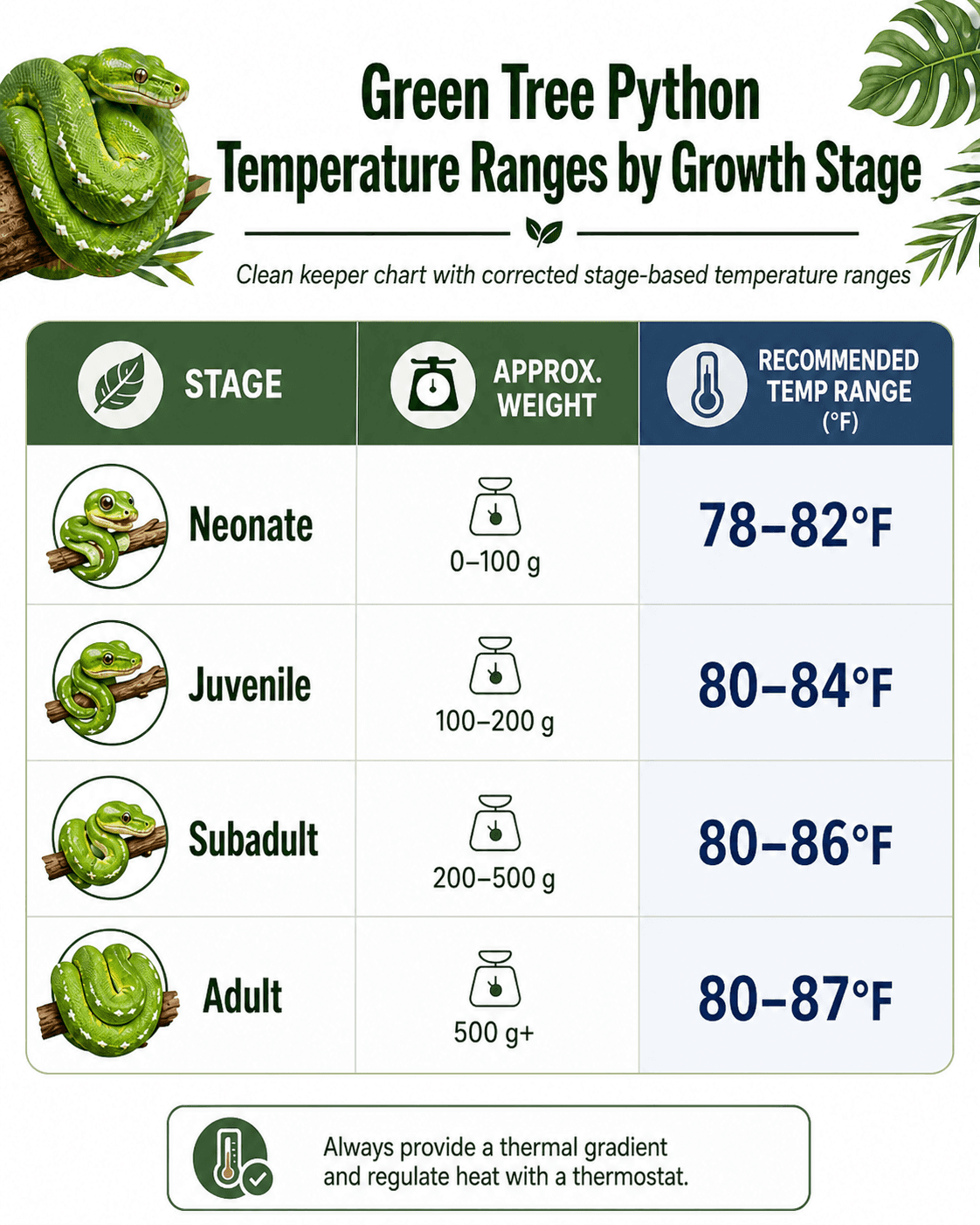
Your hottest spot should reach 84-85 degrees BUT ALSO ALLOW FOR AN AMBIENT TEMP on the cool side of the tub.
Your hottest spot should reach 84-85 degrees BUT ALSO ALLOW FOR AN AMBIENT TEMP on the cool side of the tub.
You don't want to overheat your snakes so ideally your cool spot should be less than 80.
You don't want to overheat your snakes so ideally your cool spot should be less than 80.
I would also recommend your room doesn't get too cold or too hot. I prefer low-mid 70’s in the room if possible.
I would also recommend your room doesn't get too cold or too hot. I prefer low-mid 70’s in the room if possible.
Air Flow & Substrate
Air flow: If you buy one of the cages above, you're fine. If you're making your own, you'll just want to make sure that the cage is breathable. I always keep a fan on in my reptile room just to consistently cycle air.
Air flow: If you buy one of the cages above, you're fine. If you're making your own, you'll just want to make sure that the cage is breathable. I always keep a fan on in my reptile room just to consistently cycle air.
Substrate: I use paper towels as substrate
Substrate: I use paper towels as substrate
Perches
Temperature & Humidity
ALWAYS USE THERMOSTATS SET UP TO ANY HEATING ITEMS.
I use Herpstat thermostats* and VE thermostats.
Herpstats are superior.
I tape the probe right next to the heat source (or on larger tanks, at the level of the highest perch)
I don't measure humidity anymore, but I have automatic misting systems that spray 30 seconds every 12-16 hours. Let the tank mostly dry before spraying again — constant maxed out humidity is not good and can lead to respiratory issues.
If you happen to run into respiratory issues (wheezing, constant hissing sound while breathing that isn't actually hissing), take your animal to a vet — it could die if untreated
I use Herpstat thermostats* and VE thermostats.
Herpstats are superior.
I tape the probe right next to the heat source (or on larger tanks, at the level of the highest perch)
I don't measure humidity anymore, but I have automatic misting systems that spray 30 seconds every 12-16 hours. Let the tank mostly dry before spraying again — constant maxed out humidity is not good and can lead to respiratory issues.
If you happen to run into respiratory issues (wheezing, constant hissing sound while breathing that isn't actually hissing), take your animal to a vet — it could die if untreated
Cleaning
Keep your cages sterile!!!
Chondros are easy to care for as long as you keep their cages clean
Keep your cages sterile!!!
Chondros are easy to care for as long as you keep their cages clean
I use clorox wipes, followed by misting the chemicals off, then wiping down with paper towels. I am looking for a more organic cleaning solution - if you find one that you like, please recommend it to me. I clean once or twice a week.
I use clorox wipes, followed by misting the chemicals off, then wiping down with paper towels. I am looking for a more organic cleaning solution - if you find one that you like, please recommend it to me. I clean once or twice a week.
Chondros love clean water! I replace at least 50% of the water bowl every ~3 days. They also tend to drink off of themselves or the cage during misting.
Chondros love clean water! I replace at least 50% of the water bowl every ~3 days. They also tend to drink off of themselves or the cage during misting.
Hydration and Humidity
Purified or spring water
Purified or spring water
Change your water & clean water bowl after meals and/or any bowel movement.
Change your water & clean water bowl after meals and/or any bowel movement.
Usually babies defecate shortly after every meal, but if they don't, then still change out the water & clean the bowl at least once that week.
Usually babies defecate shortly after every meal, but if they don't, then still change out the water & clean the bowl at least once that week.
I would also recommend your room doesn't get too cold or too hot. I prefer low-mid 70’s in the room if possible.
I would also recommend your room doesn't get too cold or too hot. I prefer low-mid 70’s in the room if possible.
Typically, its good to allow for an enclosure to dry before re-spraying.
Typically, its good to allow for an enclosure to dry before re-spraying.
If you notice dryness or want them to defecate, feel free to spray the snake and some of the surroundings.
If you notice dryness or want them to defecate, feel free to spray the snake and some of the surroundings.
Just make sure you are spraying into a clean cage and not a dirty one because bacteria harbors & multiplies in humid environments.
Just make sure you are spraying into a clean cage and not a dirty one because bacteria harbors & multiplies in humid environments.
You don't want your tub to be too humid all the time.
You don't want your tub to be too humid all the time.
If your cage dries out abnormally fast, I'd encourage you to try to use a bigger water bowl place slightly closer to the heater.
If your cage dries out abnormally fast, I'd encourage you to try to use a bigger water bowl place slightly closer to the heater.
For when to spray:
During shed, when you notice any wrinkles from dryness or if you want to encourage defecation.
During shed, when you notice any wrinkles from dryness or if you want to encourage defecation.
I like to spray generously when going through shed.
I like to spray generously when going through shed.
It is not so big a deal if the cage doesn't fully dry in between spraying when going through shed.
It is not so big a deal if the cage doesn't fully dry in between spraying when going through shed.
Let's not forget this is a microenvironment you are creating so all factors are in your control.
Let's not forget this is a microenvironment you are creating so all factors are in your control.
Contact
Contact
Contact
Contact
Contact